
Table of Contents
- Understanding Fiber Content and Natural vs Synthetic Fabric Durability
- Assessing Weave and Knit Structure for Strength
- How to Check Fabric Density and Weight
- The Tactile Test: What Quality Feels Like
- Visual Inspection: Spotting Signs of Poor Quality Clothing Construction
- Testing Fabric Drape, Opacity, and Surface Texture
- Evaluating Seam Integrity and Stitch Tension
- Fabric Care and Longevity: Predicting How Long Quality Lasts
Last Updated: August 29, 2026
Understanding Fiber Content and Natural vs Synthetic Fabric Durability
The foundation of fabric quality starts with what the fabric is actually made from. Natural fibers like cotton, linen, wool, and silk have been trusted for centuries because they're breathable, biodegradable, and age gracefully. Synthetic fibers such as polyester, nylon, and acrylic are engineered to resist wrinkles and fading, but they trap moisture and often pill more easily over time.
Here's what matters: natural fibers tend to improve with wear and washing, developing a softer hand-feel and deeper character. Synthetic fibers can feel stiff initially and may never soften the same way. A blend of both, say, 80% cotton with 20% polyester for durability, often delivers the best balance for everyday wear.
At Birch & Co., we prioritize natural fiber content in our core collection. Cotton softens after multiple washes. Linen becomes more fluid. Wool resists odor naturally. These aren't just marketing claims; they're observable changes that justify the investment in quality from the start.
To assess fiber content, check the garment label. It should clearly list percentages. A 100% natural fiber piece will cost more upfront but typically outlast blends by years. Conversely, a 100% synthetic garment may be cheaper but won't develop the same patina or comfort over time. The real question isn't which is "better", it's which aligns with how long you want the piece to last.
Assessing Weave and Knit Structure for Strength
Weave structure determines how tightly fibers are locked together. A tight weave resists pilling, tearing, and general wear. A loose weave feels softer initially but deteriorates faster under friction and washing.
Common weave types include plain weave (the most durable), twill (diagonal pattern, also very strong), and satin (smooth but less durable). Knit structures vary too: jersey knit is stretchy and comfortable but prone to snagging, while rib knit is tighter and more resistant to distortion.
To evaluate weave density, hold the fabric up to light. If you can see through it easily, the weave is loose. If light barely penetrates, the weave is tight. A tighter weave means longer-lasting fabric. This is one of the most reliable visual cues you can use in-store or when evaluating online product photos.
Knit density works similarly. Press your finger gently against a knit garment. If your finger sinks in easily, the knit is loose. If it resists pressure, the knit is dense and will hold its shape better after repeated wearing and washing. Dense knits recover from stretching; loose knits don't.
The relationship between weave structure and durability is direct: tighter construction equals longer life. This is why a premium cotton t-shirt from a quality brand feels substantial and holds up for years, while a cheap t-shirt from a fast-fashion retailer feels thin and falls apart within months.
How to Check Fabric Density and Weight
Fabric density is measured in GSM, grams per square meter. This number tells you how much material is packed into a given area. Higher GSM generally means heavier, more durable fabric.
Lightweight fabrics: 80-150 GSM (think summer dresses, dress shirts) Midweight fabrics: 150-250 GSM (most everyday wear, t-shirts, casual pants) Heavyweight fabrics: 250+ GSM (winter coats, sturdy workwear, upholstery)
You won't always see GSM listed on retail tags, but you can estimate by feel and weight. Pick up two similar-sized garments, one you suspect is quality and one that's cheaper. The quality piece should feel noticeably heavier and more substantial in your hands.
For upholstery and home textiles like the Nordic Cotton and Linen Fabric Sofa, GSM becomes even more critical. Lighter upholstery fabrics (under 300 GSM) sag and wear thin quickly. Premium upholstery typically runs 400-600 GSM, which is why it resists sagging and holds its shape for decades.

When shopping online, brands that list GSM are usually confident in their product. If a description omits weight entirely, that's often a signal the fabric is on the lighter, less durable side. Ask the seller directly, reputable brands will provide this information.
The Tactile Test: What Quality Feels Like
Run your hand across the fabric. Quality fabrics have a consistent, smooth hand-feel. You shouldn't feel bumps, slubs, or irregular texture unless that's intentional (like linen's characteristic nubs, which add character).
Press your fingers into the fabric. Quality materials bounce back quickly; cheap fabrics stay compressed. This recovery test reveals whether the fibers have resilience or if they're already fatigued.
Stretch the fabric gently. Quality fabrics have stretch recovery, they return to their original shape after gentle pulling. Cheap fabrics don't recover; they stay stretched. This is especially true for knits and jersey materials.
Feel for pilling potential by rubbing the fabric briskly with your fingertip. If tiny balls of fiber form immediately, the fabric has weak fibers or loose construction. Quality fabrics resist pilling or pill very minimally.
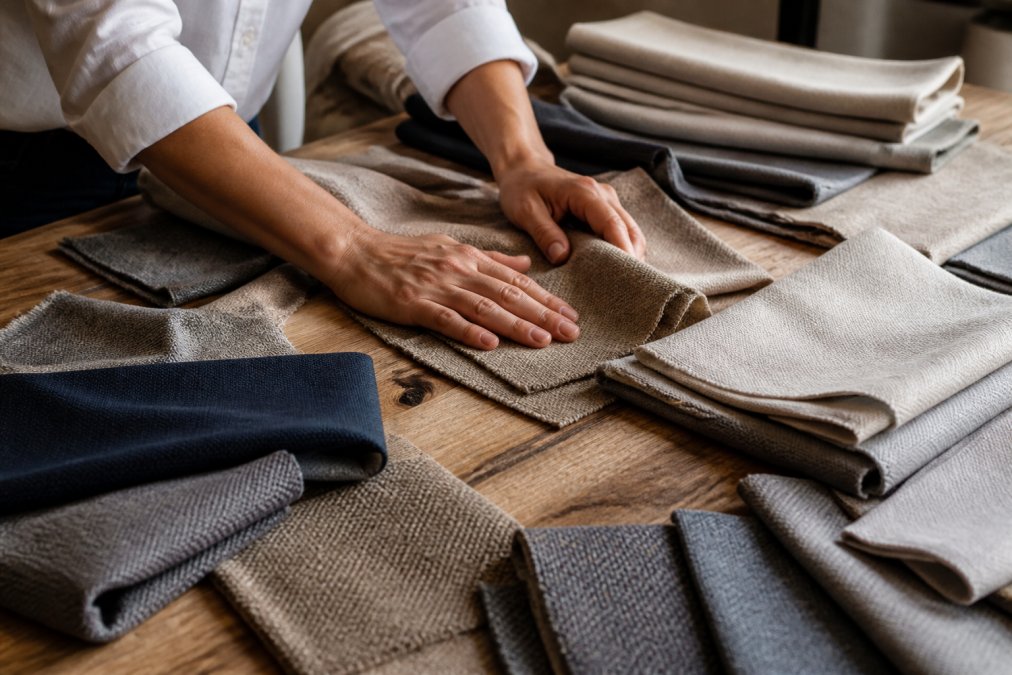
The tactile test is immediate and reliable. You don't need equipment or expertise, just your hands and a few seconds. A quality fabric feels confident: smooth, substantial, and responsive to touch. A cheap fabric feels thin, limp, or inconsistent. Trust that first-touch impression; it rarely lies.
This is where shopping in-store has an advantage over online. You can feel the fabric directly. When buying online, ask sellers if they offer fabric swatches or detailed texture descriptions. Reputable brands often do.
Visual Inspection: Spotting Signs of Poor Quality Clothing Construction
Look closely at the garment's overall finish. Quality pieces have clean seams, even stitching, and no loose threads. Poor-quality pieces have crooked seams, uneven stitch lengths, and visible loose threads throughout.
Examine the selvage, the finished edge of the fabric. A clean, intact selvage indicates the fabric was handled carefully. A torn or frayed selvage suggests rough handling or inferior production standards.
Check the print or pattern alignment. On quality garments, patterns match at seams and are printed evenly across the entire piece. Misaligned patterns, bleeding dyes, or uneven color are red flags for poor quality.
Look at the inside of the garment. Quality pieces have finished seams inside (flat-felled seams, French seams, or bound seams). Cheap garments have raw, unfinished seams inside that will fray with washing.
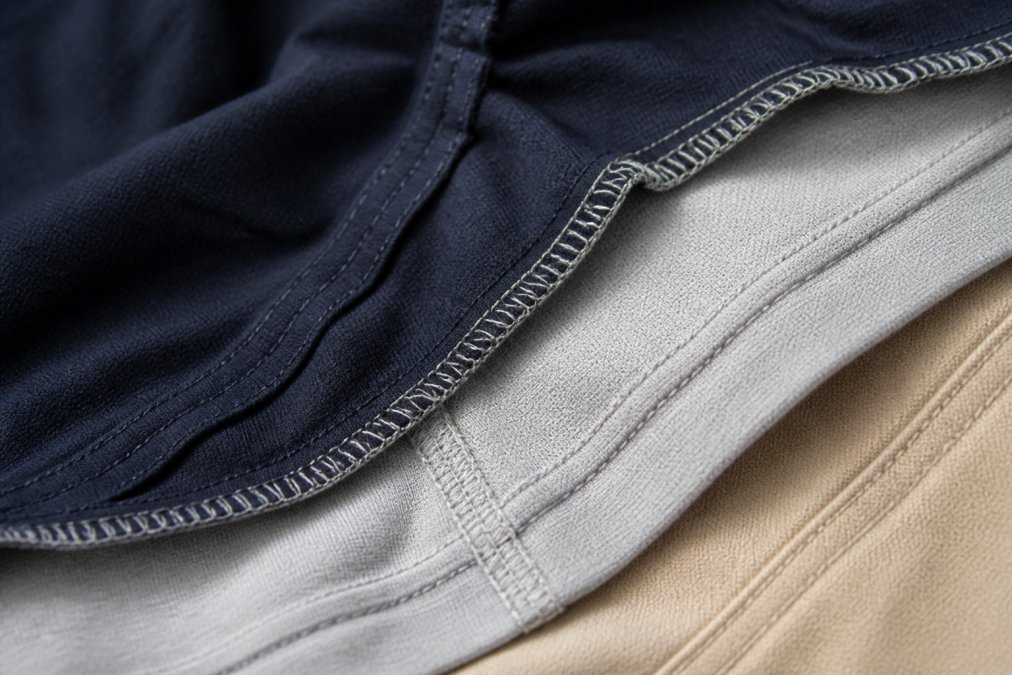
For buttons and closures, quality garments use reinforced buttons with multiple anchor points. Cheap garments use single-stitch buttons that pop off easily. Similarly, zippers should glide smoothly; rough, sticky zippers indicate low-quality hardware.
Stitch tension should be consistent throughout. Loose stitches suggest rushed production. Tight stitches that pucker the fabric suggest poor calibration. Even tension is the mark of care and precision.
Testing Fabric Drape, Opacity, and Surface Texture
Fabric drape describes how the material hangs and moves. Quality fabrics drape elegantly, they flow and fold naturally. Poor fabrics hang stiffly or bunch awkwardly.
To test drape, hold the fabric vertically and observe how it falls. Does it create smooth, flowing folds? That's good drape. Does it stick together or hang in rigid lines? That indicates low-quality fiber or improper finishing.
Opacity matters for garments where transparency is a concern. Hold the fabric up to light. Quality fabrics maintain opacity; you shouldn't see through them unless that's intentional (like a sheer blouse). Cheap fabrics often have poor opacity, meaning they're see-through when they shouldn't be.
Surface texture should be intentional and consistent. Quality fabrics have a uniform texture throughout, smooth, nubby, or textured depending on the design. Poor fabrics have inconsistent texture, with some areas smooth and others rough or pilled.
Run your hand across the surface in multiple directions. Quality fabrics feel the same regardless of direction. Cheap fabrics feel different depending on which way you stroke them, this indicates poor fiber alignment or low-quality yarn.
Evaluating Seam Integrity and Stitch Tension
Seams are where fabrics fail first. Examine them closely on any garment you're considering.
Quality seams are straight and even. The stitches should be uniform in length, typically 8-10 stitches per inch for most garments. Uneven stitch length indicates rushed or careless production.
Check the seam allowance, the fabric between the seam line and the edge. Quality garments have adequate seam allowance (typically 1.5 cm), which means the seam won't unravel if you catch it slightly. Cheap garments often have minimal seam allowance, making them fragile.
Look for reinforced seams at stress points, armholes, crotch seams, and hem areas. Quality garments have double stitching or reinforced stitching at these points. Single-stitch seams at stress points will fail within a season or two.
The type of seam matters too. Flat-felled seams (where one edge is folded and stitched twice) are stronger than simple seams. French seams (where raw edges are enclosed) prevent fraying. Bound seams (where edges are wrapped in bias tape) are durable and look refined. Simple, single-stitch seams are the weakest option.
Run your finger along seams from the inside. They should feel smooth and finished. Rough, raw edges indicate the garment will fray with washing. Finished edges mean the garment was made with care and will last.
Fabric Care and Longevity: Predicting How Long Quality Lasts
Quality fabrics require proper care, and understanding care instructions reveals a lot about expected longevity.
Garments requiring hand-washing or delicate machine cycles are usually made from more delicate fibers, silk, fine wool, or specialty blends. These materials are luxurious but fragile. Garments labeled "machine washable" in warm or hot water are typically more durable everyday fabrics.
Check the care label for any special requirements. If it says "dry clean only," the fabric is either delicate or the dye isn't colorfast. If it says "lay flat to dry," the fabric may lose shape if hung. These instructions hint at the fabric's fragility.
Colorfastness matters for longevity. Quality fabrics retain their color through multiple washes. Poor fabrics fade noticeably after just a few washes. When you first wash a garment, if the water turns significantly darker, the dye wasn't properly set, that garment will continue fading.
Pilling tendency decreases over time with quality fabrics. Initial pilling is normal with natural fibers, but it stabilizes after a few washes. With cheap fabrics, pilling continues indefinitely, making the garment look shabby.
The real test of quality is wear and washing. A quality garment looks and feels better after a season of regular use. A cheap garment looks worse. This is why investing in quality from Birch & Co. makes sense, pieces are designed to improve with age, not deteriorate.
To predict longevity, consider the combination of fiber content, construction quality, and care requirements. A 100% natural fiber garment with tight weave, reinforced seams, and simple care instructions will outlast a synthetic blend with loose construction and complex care requirements by years.
Identifying quality fabrics isn't complicated, it's about knowing what to look for and trusting your senses. Start with fiber content, move through construction details, and finish with the tactile test. These steps take minutes but reveal everything about how long a piece will actually last.
At Birch & Co., we apply these same standards to every piece in our collection. Our curated selection of everyday essentials is built on natural fibers, thoughtful construction, and timeless design. When you choose quality over fast-fashion alternatives, you're investing in pieces that simplify your wardrobe and improve with wear. Explore our collection of premium basics, from our Auckland Wool Fabric Sofa to everyday essentials designed to last.

Frequently Asked Questions
Q: How do you tell if fabric is high quality?
A: High-quality fabric shows consistent fiber content, tight weave or knit density, and uniform color without visible slubs or pilling. Run your hand across it, quality fabric feels smooth with no loose threads. Check the GSM (grams per square meter); heavier fabric typically indicates durability. Examine seams for even stitch tension and no gaps. Natural fibers like wool and linen often signal longevity, though quality synthetics can also perform well when properly constructed. Look for selvage edges and minimal translucency unless sheer fabric is intended.
Q: What's the difference between natural and synthetic fiber quality?
A: Natural fibers like cotton, wool, and linen offer breathability, moisture-wicking, and colorfastness when properly treated, making them ideal for everyday wear. They tend to improve with age and care. Synthetic fibers like polyester and nylon provide stretch recovery, durability against pilling, and often lower cost, but lower-quality synthetics can trap moisture and degrade faster. Quality matters more than fiber type, a well-constructed synthetic can outperform poorly made natural fiber. Premium blends combine benefits: cotton-linen mixes gain linen's durability while retaining cotton's softness.
Q: What are the signs of poor quality clothing construction?
A: Poor construction shows uneven stitch tension, loose or fraying seams, and gaps between stitches. Check hems for puckering and armholes for pulling. Pilling appears quickly on low-quality fabric, especially in high-friction areas. Seams may separate after a few washes. Buttons feel flimsy or poorly attached. Fabric may warp or shrink unpredictably. Translucency in non-sheer garments signals thin, weak fabric. Loose threads throughout indicate rushed manufacturing. Quality pieces feature reinforced stress points, clean finishes, and consistent color without fading after initial wear.
Q: How does fabric weight affect how long a garment lasts?
A: Fabric weight, measured in GSM, directly impacts durability. Heavier fabrics (200+ GSM) generally resist pilling, tearing, and wear better than lightweight options. However, weight alone doesn't guarantee longevity, a 150 GSM linen with tight weave outperforms 180 GSM loosely woven polyester. For everyday essentials like the Nordic Cotton and Linen Fabric Sofa at Birch & Co., adequate weight paired with natural fiber content and quality construction ensures pieces withstand years of use. Lighter fabrics work for specific uses (summer clothing, delicate items) but won't match the durability of properly weighted everyday basics.
This article was written using GrandRanker