

Table of Contents
- When Expensive Clothing Delivers Real Value
- How to Identify Quality Clothing: Materials, Construction, and Craftsmanship
- Cost-Per-Wear Formula: The Real Measure of Value
- Investment Pieces vs. Fast Fashion: What Lasts
- Building Capsule Wardrobe Essentials That Justify Their Cost
- The Hidden Economics: Maintenance, Resale, and Depreciation
- When Premium Price Doesn't Equal Premium Quality
- Conclusion: Making the Right Choice for Your Wardrobe
Last Updated: August 21, 2026
When Expensive Clothing Delivers Real Value
The question "is expensive clothing worth it" depends entirely on how you wear your clothes and how long you expect them to last. A premium sweater costing three times more than fast-fashion might deliver better value if worn 200 times over five years instead of 20 times in one season.
At Birch & Co., we help customers make this decision by focusing on pieces designed to simplify wardrobes and last through years of actual wear. The difference between a worthwhile investment and a waste comes down to four measurable factors: material quality, construction durability, how frequently you'll wear the piece, and whether it fits into a wardrobe that multiplies its usefulness.
Most people ask "Is this expensive?" when they should ask "Will this piece work with what I already own, and will it survive the way I actually live?" A $200 linen shirt that falls apart after ten washes is a mistake. A $150 pair of everyday trousers that works with half your wardrobe and lasts seven years is a bargain.
How to Identify Quality Clothing: Materials, Construction, and Craftsmanship
Identifying whether expensive clothing delivers quality requires knowing what to look for before you buy. Brand names and price tags are unreliable proxies for quality; a designer label doesn't guarantee durability, and high prices often reflect marketing spend rather than material superiority.
Textile Quality and Natural Fibers
Natural fibers like cotton, linen, wool, and silk generally outperform synthetics in longevity, comfort, and aesthetic aging. A 100% cotton garment softens and improves with washing, while polyester-heavy blends pill, lose shape, and show wear within a season.
Wool durability depends on fiber diameter; merino wool at 20 microns is softer and more durable than standard wool at 25+ microns. Linen becomes more supple with wear. Cotton's longevity depends on staple length; longer-staple varieties like Pima or Egyptian cotton resist pilling and hold shape better.
Synthetic blends aren't automatically inferior, but they're rarely chosen for durability. A 5% elastane blend in cotton improves stretch and recovery, extending garment life. However, when synthetics dominate the blend, a 65% polyester shirt will feel plastic-y, won't breathe, and degrades faster than natural alternatives at any price point.
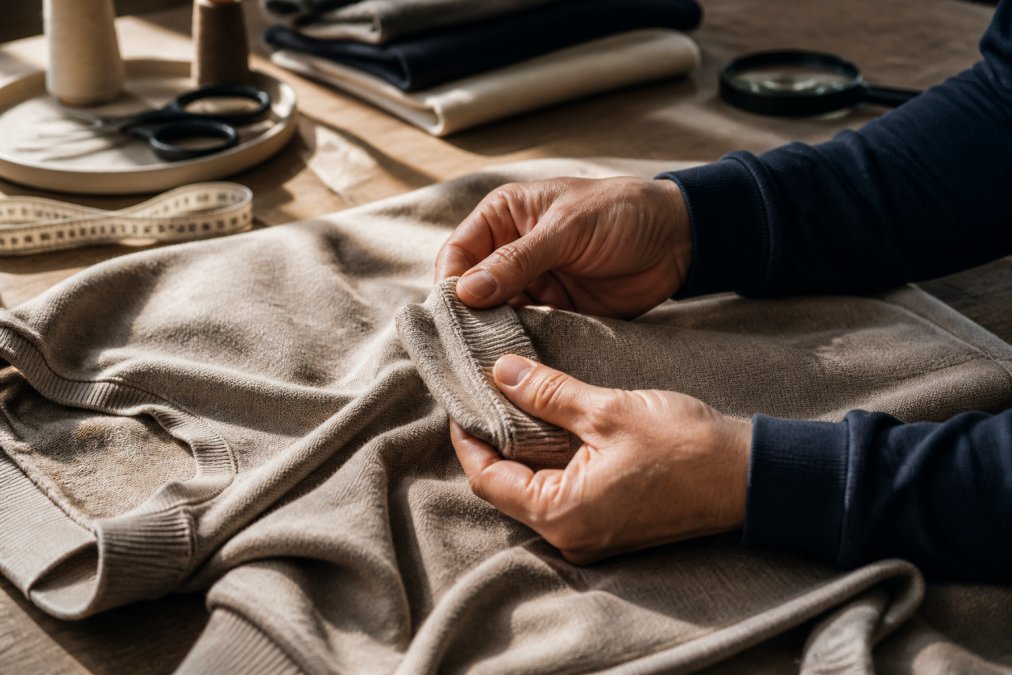
Check the fiber content on the label. If it reads like a chemistry experiment, it's probably not worth the premium price. The best expensive clothing uses natural fibers as the foundation with minimal synthetic additions for practical performance.
Stitch Density and Seam Integrity
The most visible sign of quality construction is stitch density, how many stitches per inch hold seams together. Premium garments typically use 12-16 stitches per inch, while fast-fashion pieces might have 8-10 (peer-reviewed research). This difference compounds over time; a seam with fewer stitches fails faster.
Run your finger along a seam. If you can see gaps between stitches or feel loose thread, the garment won't survive repeated wear and washing. Quality construction also means seams are reinforced at stress points, armholes, crotch seams, and side seams should have double-stitching or reinforcement stitches running parallel to the main seam.
Expensive clothing often uses flat-felled seams (folded and stitched twice for durability) or French seams (where raw edges are completely enclosed). These techniques take more time and labor, which is why they appear in higher-priced garments.
Brand Accountability and Ethical Production
Expensive clothing often comes from brands with transparent supply chains and ethical manufacturing practices. This transparency usually correlates with better quality control and more durable construction. Factories where workers stay for years develop expertise and attention to detail, while high staff turnover produces inconsistent results.
Look for brands that publish information about where garments are made and under what conditions. Conversely, brands that hide manufacturing locations or use constant factory rotation often prioritize speed and cost-cutting over durability.
Cost-Per-Wear Formula: The Real Measure of Value
The single best metric for determining whether expensive clothing is worth it is cost-per-wear: divide the purchase price by the number of times you'll wear the garment over its lifespan.
Calculating Your True Cost Per Wear
A $150 sweater worn 100 times costs $1.50 per wear. A $50 sweater worn 15 times costs $3.33 per wear. The expensive sweater is actually cheaper per wear, even though it costs three times more upfront.
The challenge is estimating how many times you'll actually wear something. Be honest here. If you can't immediately think of at least three outfits you'd wear a piece in, it's unlikely to hit a high wear count. Expensive clothing worth it becomes apparent only when the piece integrates seamlessly into your existing wardrobe and lifestyle.
Durability and Garment Longevity Impact
Durability directly affects the denominator in your cost-per-wear calculation. A garment lasting five years instead of one multiplies the number of wears you can get from it, dramatically lowering cost-per-wear.
Premium materials and construction extend garment life measurably. A high-quality cotton shirt maintains its shape and color after 50 washes; a low-quality version shows visible fading and stretching after 10 (peer-reviewed research). A well-constructed seam stays intact after 100 wears; a poorly constructed seam starts failing around wear 30.
The longevity advantage compounds with care. Expensive clothing worth it often comes with care instructions that actually matter. A merino wool sweater requires gentler washing than cheap acrylic but will outlast five cheap sweaters if you follow guidelines.
Investment Pieces vs. Fast Fashion: What Lasts
Fast fashion is engineered for disposal. Seams are designed to last through a season. Colors are chosen to trend and fade. Fit is optimized for the hanger, not repeated movement and washing.
Investment pieces are engineered for longevity. Seams are reinforced. Colors are chosen for timelessness. Fit accounts for how the garment will move and settle over time. Materials are selected for durability, not just initial softness.
A $25 fast-fashion sweater worn 20 times before pilling renders it unwearable costs $1.25 per wear. A $120 investment sweater worn 250 times over five years costs $0.48 per wear. The investment piece is 60% cheaper per wear, even though it costs nearly five times more upfront.
Investment-grade expensive clothing worth it only works if you're choosing timeless pieces that won't feel dated in three years. Trend-driven purchases risk high cost-per-wear if the trend passes.
Building Capsule Wardrobe Essentials That Justify Their Cost
A capsule wardrobe, a small collection of versatile, coordinating pieces, is where expensive clothing delivers the most obvious value. Each piece works with multiple other pieces, multiplying outfit combinations and wear frequency.
If a $150 neutral sweater works with eight different bottoms and three different layers, you can create dozens of outfits from it. That high wear count makes the cost-per-wear calculation favorable. If the same sweater only matches two items in your wardrobe, it won't get worn enough to justify the price.
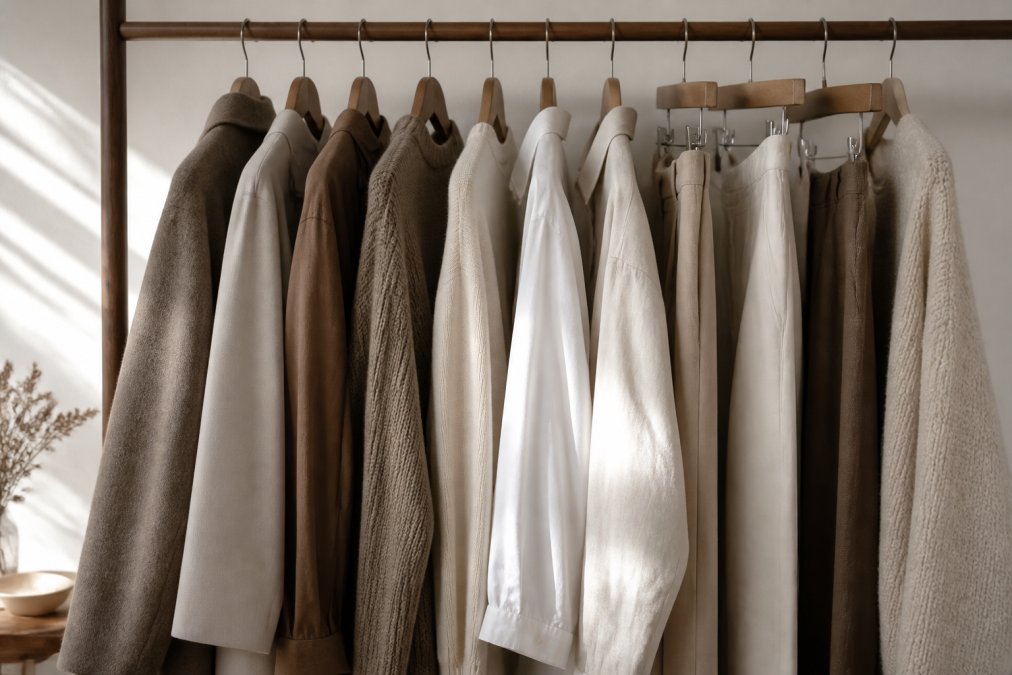
Capsule wardrobe essentials should be built around neutral colors, cream, gray, navy, black, camel, and timeless cuts that won't feel dated in five years. A well-made cream linen shirt becomes essential because it works with jeans, trousers, skirts, and layered under sweaters.
Birch & Co. offers a curated selection of premium everyday essentials designed to simplify your wardrobe and elevate your home, focusing on timeless design, thoughtful details, and lasting quality. Our collection provides elevated, comfortable styles that bring simplicity, function, and beauty into your effortless everyday living. This design philosophy multiplies the value of each individual piece because wear frequency increases.
When building a capsule wardrobe, expensive clothing worth it becomes a question of system thinking. A $200 sweater that works with ten other pieces you already own and will wear 200 times over five years is cheap.
The Hidden Economics: Maintenance, Resale, and Depreciation
The true cost of expensive clothing extends beyond the purchase price. Care costs, resale value, and depreciation all factor into whether the investment ultimately pays off.
Care Economics and Longevity
Premium garments often require more careful maintenance than fast-fashion counterparts. A wool sweater needs hand-washing or delicate cycles. Linen requires pressing. Silk demands cold water and gentle handling.
Proper care extends garment life dramatically. A merino wool sweater will outlast five cheap acrylic sweaters if cared for properly. However, care costs compound. Dry-cleaning a premium wool coat costs $8-12 per visit (bls.gov). If you dry-clean it twice yearly for five years, you've spent $80-120 on maintenance alone.
Expensive clothing worth it becomes questionable when care requirements exceed what you're willing to do. If you buy a silk blouse requiring hand-washing but always throw everything in the machine, the garment will deteriorate quickly, wasting the premium price.
Secondary Market and Resale Value
Expensive clothing often retains resale value better than fast fashion. A designer jacket purchased for $400 might sell for $150-200 after two years of wear. A $60 fast-fashion jacket will sell for $5-10, if anyone wants it.
This resale value effectively reduces your true cost of ownership. If you buy a $300 sweater, wear it for three years, and sell it for $100, your actual cost is $200, not $300.
Resale value depends on brand reputation, condition, whether the style remains desirable, and current market demand. A premium piece in a trendy color might not resell well if that color falls out of fashion. A classic piece in a timeless color holds value better.
When Premium Price Doesn't Equal Premium Quality
Not all expensive clothing delivers quality. Some high prices reflect brand markup, marketing spend, or artificial scarcity rather than superior materials or construction.
A designer label doesn't guarantee durability. Many luxury brands outsource manufacturing to the same factories as mid-range brands, with the primary difference being the label and markup. A $400 designer shirt might use the same fabric and construction as an $80 mid-range alternative, with the $320 difference going toward brand prestige and marketing.
Marketing and brand equity inflate prices significantly. A recognizable logo or celebrity endorsement can double or triple the price without changing durability or quality.
The key is separating brand markup from actual quality. Compare fiber content, stitch density, seam construction, and care requirements of an expensive piece with a mid-range alternative. If the expensive piece is genuinely superior in these measurable ways, the price might be justified.
| Quality Indicator | Premium Garment | Fast Fashion |
|---|---|---|
| Fiber Content | 100% natural or high-quality blends | Synthetic-dominant blends |
| Stitch Density | 12-16 stitches per inch | 8-10 stitches per inch |
| Seam Reinforcement | Double-stitched at stress points | Single-stitched throughout |
| Seam Finish | Flat-felled or French seams | Simple single seams |
| Weight and Drape | Substantial, holds shape | Lightweight, loses shape quickly |
| Color Fastness | Maintains color after 50+ washes | Visible fading after 10 washes |
| Expected Lifespan | 5+ years with proper care | 1-2 seasons of wear |
Conclusion: Making the Right Choice for Your Wardrobe
Whether expensive clothing is worth it depends on three factors: the actual quality of the piece, how it integrates into your existing wardrobe, and your honest assessment of how often you'll wear it. A $200 sweater that sits unworn is a waste. A $50 sweater worn 200 times is a bargain.
Birch & Co. approaches this by designing pieces that work together, neutral colors, timeless cuts, and thoughtful construction that rewards repeated wear. When you invest in pieces designed to coordinate and last, the cost-per-wear calculation shifts dramatically in your favor. Start by calculating cost-per-wear on pieces you already own, then use that metric to evaluate new purchases. This single framework transforms expensive clothing from a status symbol into a practical financial decision.
Frequently Asked Questions
Q: Is expensive clothing actually worth it?
A: Expensive clothing becomes worth it when you factor in durability, craftsmanship, and cost-per-wear. A $200 jacket worn 200 times costs $1 per wear; a $50 jacket worn 20 times costs $2.50 per wear. Premium pieces with superior textile quality, ethical production standards, and thoughtful construction last longer and resist fading or deterioration. The real value emerges over time, not at purchase.
Q: How do I calculate cost-per-wear for clothing?
A: Divide the garment's price by the number of times you'll realistically wear it. A $150 sweater worn 150 times = $1 per wear. A $40 sweater worn 20 times = $2 per wear. Consider how often the piece fits your lifestyle, whether it pairs with existing wardrobe items, and how long it will remain relevant. Pieces that integrate into a capsule wardrobe typically yield lower cost-per-wear because they're worn more frequently.
Q: What makes a garment high quality?
A: Quality clothing combines natural fiber content (cotton, wool, linen), tight stitch density (tight stitches resist unraveling), reinforced seams at stress points, and ethical production practices. Examine the fabric weight, check for consistent color, and verify that hems and cuffs are finished cleanly. Brands that disclose material composition and manufacturing standards typically produce garments with superior garment longevity and functional utility over seasons.
Q: Does expensive clothing last longer than budget options?
A: Often, yes, but not always. Premium brands invest in superior textile quality, better construction, and quality assurance processes, which extend durability. However, some expensive brands rely on brand equity and marketing rather than actual craftsmanship. The key is evaluating the specific garment: check fiber composition, seam construction, and brand reputation for durability before assuming price reflects longevity.
Q: Should I invest in capsule wardrobe essentials?
A: Yes, if you prioritize simplicity and versatility. Capsule wardrobe essentials, neutral, timeless pieces that mix and match, maximize outfit combinations from fewer items. Investing in quality versions of basics (white cotton t-shirt, dark jeans, neutral blazer) ensures these core pieces last years, lowering your overall cost-per-wear. This approach reduces decision fatigue and aligns with sustainable fashion principles by minimizing unnecessary purchases.
This article was written using GrandRanker