

Table of Contents
- Why Durable Clothing Quality Matters
- Best Fabrics for Long-Lasting Clothes
- How to Spot Quality Stitching
- Signs of High-Quality Clothing Construction
- What to Check Before Buying Online
- Post-Purchase Care to Extend Garment Life
- Cost-Per-Wear: Understanding True Value
- Frequently Asked Questions
Last Updated: September 17, 2026
Why Durable Clothing Quality Matters
When you invest in a piece of clothing, you're making a choice about your future. A garment that falls apart after three wears costs more per wear than one that lasts for years. This is where understanding durable clothing quality becomes essential.
Durability isn't just about longevity. It's about value. A well-made piece simplifies your wardrobe because you reach for it repeatedly. You spend less time shopping for replacements. Your closet becomes more functional. At Birch & Co., we've built our collection around this principle, pieces designed to become everyday staples, not seasonal trends.
The challenge is knowing what to look for. Most shoppers focus on price or style alone. They miss the technical markers that separate clothing built to last from clothing built to be replaced. This guide covers the specific checks you can make before buying, plus the maintenance habits that extend any garment's life.
Best Fabrics for Long-Lasting Clothes
The fabric you choose determines how a garment ages. Some materials resist wear naturally. Others break down quickly under normal use. Understanding the difference shapes every durability decision you'll make.
Natural Fiber Advantages
Natural fibers have earned their reputation for longevity. Cotton, linen, and wool have been worn for centuries because they genuinely last when treated properly.
Cotton is the foundation of durable basics. High-quality cotton resists pilling and maintains its shape through repeated washing. Look for fabrics labeled with GSM (grams per square meter), higher numbers indicate denser, more durable fabric. The Essential Heavyweight Pocket Hoodie from Birch & Co. uses 420 GSM cotton-blend fabric, which delivers the substantial feel and durability expected from everyday essentials.

Linen offers exceptional longevity. It becomes softer with age instead of deteriorating. Linen garments often improve over years of wear, making them a genuine long-term investment.
Wool resists wrinkles and odors naturally. Quality wool garments maintain their shape and warmth for decades. The fiber's natural crimp provides elasticity that bounces back after wear.
These natural fibers share one advantage: they breathe. Your body stays comfortable, which reduces stress on seams and fabric. Less stress means longer life.
Synthetic vs. Natural Fiber Blends
Pure natural fibers aren't always the answer. Blends often outperform pure materials by combining benefits.
A cotton-polyester blend adds durability where pure cotton might weaken. Polyester resists shrinking and fading. It adds strength to seams. The Cropped Half-Zip Hoodie combines 28% cotton with 72% polyester, creating a fabric that resists wear while maintaining breathability.
The key is proportion.
Synthetic blends also resist pilling better than pure cotton. Pilling occurs when short fibers break and ball up on the fabric surface. Polyester fibers are longer and stronger, reducing this problem significantly.
How to Spot Quality Stitching
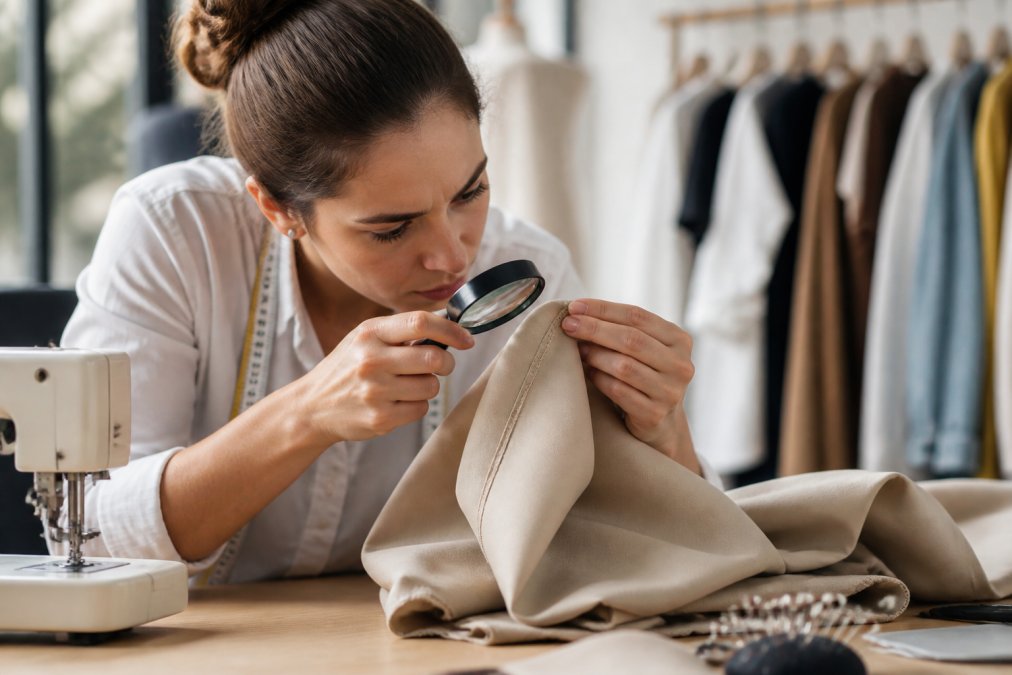
Stitching is where durability lives. A perfectly chosen fabric falls apart if the seams fail. Quality stitching keeps a garment intact through years of wear and washing.
Checking Seams and Stitch Density
Run your fingers along a seam. Quality stitching feels smooth and even. No loose threads. No gaps between stitches.
Stitch density is the number of stitches per inch. Higher density means stronger seams. A quality garment has at least 8-10 stitches per inch on major seams. You can count them if you look closely. Loose, widely-spaced stitches indicate a garment built for low cost, not longevity.
Look at the thread color. It should match the fabric. Mismatched thread suggests corners were cut during production. The manufacturer didn't care enough to source the right supplies.
Check inside the garment. Seams should be clean and finished. The raw edges of fabric should be sealed or bound. An overlock stitch (a special machine stitch that wraps the edge) prevents fraying. Unfinished seams unravel quickly, especially in the wash.
Reinforcement at Stress Points
Stress points are where seams fail first. Armpits, crotch seams, and pocket corners take constant strain. Quality garments reinforce these areas.
Look for double-stitched seams at high-stress points. A second row of stitching runs parallel to the first. This doubles the holding power. It's a simple technique that separates durable clothes from disposable ones.
Pocket corners should have reinforcement stitching in a triangular or box pattern. This keeps the pocket from tearing away from the garment body. Without it, pockets tear within months.
Seam allowance, the fabric between the stitch line and the raw edge, should be generous. Narrow seam allowances fray and weaken quickly.
Signs of High-Quality Clothing Construction
Construction quality extends beyond stitching. Hardware, buttons, and fabric weight all contribute to how long a garment survives daily wear.
Hardware and Zipper Quality
Zippers fail constantly on cheap garments. A quality zipper should glide smoothly without sticking or snagging.
Open and close a zipper several times before buying. It should move effortlessly. If it catches or feels rough, the slider is poorly made. The teeth don't align properly. The zipper will fail within months.
Feel the zipper pull. Quality pulls are substantial and secure. Cheap pulls break off easily, leaving you unable to operate the zipper. A reinforced pull attached with multiple stitches lasts years.
Check the zipper track, the fabric tape the slider runs on. It should be tightly woven and securely attached. Loose zipper tape causes the slider to bind and eventually break.
Button and Buttonhole Standards
Examine the buttonhole. It should be cleanly finished with no fraying. Machine-made buttonholes are precise and uniform. Hand-finished buttonholes show slight variation but excellent craftsmanship.
The buttonhole should be slightly larger than the button. Too tight and the button strains the buttonhole. Too loose and the button slips through, defeating its purpose. A quality garment has perfectly proportioned buttonholes.
Feel the button itself. Quality buttons are substantial, they don't feel cheap or hollow. Natural materials like bone or wood indicate higher quality than thin plastic. Plastic buttons are fine if they're thick and well-attached, but thin plastic suggests the garment won't last.
Fabric Weight and GSM
GSM (grams per square meter) measures fabric density. Higher GSM means denser, more durable fabric.
- Lightweight fabric: 100-150 GSM (t-shirts, summer wear)
- Midweight fabric: 150-250 GSM (everyday basics)
- Heavyweight fabric: 250+ GSM (hoodies, sweatpants, winter wear)
The Birch & Co. Heavyweight Essential Cotton T-Shirt uses 260 g/m² fabric, placing it in the midweight-to-heavyweight range. This density creates a structured, premium feel that resists thinning and pilling.

Heavier fabric resists pilling because the fibers are tightly packed. Lighter fabrics pill more easily because loose fibers break and ball up on the surface. For everyday basics, aim for at least 200 GSM.
Feel the fabric weight in your hands. It should feel substantial, not flimsy. Thin fabric feels papery and weak. Quality fabric has body and density.
What to Check Before Buying Online
Online shopping removes the ability to touch and inspect. But you can still identify quality markers by knowing what to look for.
Read the fiber content carefully. The label lists fibers in order by percentage. If you want natural fiber, cotton or linen should be first. Check the GSM if provided, it's often listed in product descriptions.
Examine product photos closely. Look at seams in the images. Can you see stitch density? Are seams reinforced? Professional product photography shows these details. If the photos are blurry or don't show seams, that's a red flag.
Check the care instructions. Quality garments provide detailed washing guidance. Generic instructions suggest less attention to construction. Specific instructions like "wash cold on gentle cycle" and "tumble dry low" indicate the manufacturer cares about longevity.
Read customer reviews for durability mentions. Look for comments about how the garment holds up after multiple washes. Reviews mentioning pilling, shrinking, or seam failure are warnings.
Post-Purchase Care to Extend Garment Life
Quality construction matters only if you maintain the garment properly. The right care habits double or triple a garment's lifespan.
Cost-Per-Wear: Understanding True Value
Price is meaningless without context. A $200 garment worn twice costs more per wear than a $50 garment worn 200 times.
Frequently Asked Questions
What fabric characteristics indicate high-quality durable clothing?
High-quality fabrics have substantial weight (measured in GSM or grams per square metre), tight weave construction, and proper fiber content. Natural fibers like cotton and linen offer breathability and durability, while quality synthetic blends add stretch recovery and colorfastness. Check the garment label for fiber content percentages and look for terms like 'heavyweight' or specific GSM measurements, which indicate a more substantial, longer-lasting fabric.
How can you tell if a garment is well-constructed?
Examine the stitching for consistency and density, quality garments have tight, even stitches with no loose threads. Look for reinforcement at stress points like pocket corners, armholes, and zipper tracks. Check that seams are straight, hems are secure, and buttons are sewn with multiple passes of thread. Hardware like zippers should move smoothly without snagging, and buttonholes should be clean and properly bound. These details signal thoughtful garment construction that will withstand regular wear.
Does a higher price tag always mean better clothing quality?
Price alone doesn't guarantee quality. Many fast-fashion retailers use premium pricing without matching construction standards. Instead, examine the actual garment: fabric weight, stitch density, seam allowance, and hardware quality. A well-made piece from a brand focused on timeless design and durable essentials offers better long-term value than a trendy item that pils or fades quickly. Calculate cost-per-wear by dividing the price by how many times you'll realistically wear it, this reveals true value better than price alone.
Why is garment weight an important indicator of quality?
Garment weight, measured in GSM (grams per square metre), directly correlates with durability and longevity. Heavier fabrics have greater tensile strength, resist pilling and snagging better, and maintain their shape through repeated washing and wearing. A 260 GSM cotton t-shirt will outlast a 150 GSM alternative, while 420+ GSM hoodies offer premium durability. Check product labels or specifications for GSM measurements, higher numbers indicate fabrics engineered to last, not just feel substantial initially.