

Table of Contents
- What a Minimalist Lifestyle Looks Like With Kids
- Start With Your Own Belongings Before the Family
- Decluttering Tips for Parents: Room-by-Room Approach
- The Toy Rotation Method That Cuts Clutter
- Minimalist Wardrobe Essentials for Kids That Last
- How to Choose Durable Home Decor That Won't Add Clutter
- Handling Gifts, Holidays, and Extended Family
- Teaching Kids About Intentional Living
- Frequently Asked Questions
Last Updated: September 7, 2026
Minimalism often feels impossible once kids enter the picture. Between the art projects, the outgrown clothes, and the birthday gifts that multiply overnight, the idea of a clutter-free home can seem like a fantasy. But a minimalist lifestyle for families isn't about sterile rooms or owning almost nothing. It's about curating a home that supports your family's actual routines, reducing the mental load of constant tidying, and making space for what matters most. At Birch & Co., we believe simplicity should feel comfortable and lived-in, not restrictive. The goal is to build a sustainable rhythm where every item in your home earns its place, and this guide will show you exactly how to get there without sparking a rebellion from your kids.
What a Minimalist Lifestyle Looks Like With Kids
A minimalist lifestyle with children is less about scarcity and more about intentionality. It means owning fewer, better things that serve a real purpose, so daily life runs more smoothly and there's less to clean, organize, and argue about. Think of it as a shift from managing excess to managing a curated collection of items that genuinely support your family's activities.
This approach directly supports conscious consumption and mindful parenting. When you have less stuff, you spend less time on maintenance and more time on family connection. The real win is the calm that comes from a home where everything has a home. This isn't about perfection; it's about creating an environment where both you and your children can breathe easier, focus better, and enjoy each other more without the constant visual noise of clutter.
Start With Your Own Belongings Before the Family
Before you touch a single toy or children's book, start with your own belongings. Your children learn far more from watching you than from listening to you, so modeling the behavior is the most effective first step. Begin with your own closet or your personal items, and be honest about what you actually use and love.
The process is straightforward: gather everything in a category, sort it into keep, donate, and toss piles, and then question every "keep." A common mistake is holding onto items out of guilt or sunk cost. Ask yourself if you would buy it again today. Apply this same standard to your wardrobe, your books, and your kitchen gadgets. Once your own spaces feel lighter, you'll have the credibility and the emotional energy to guide your family through the same process.
Decluttering Tips for Parents: Room-by-Room Approach
Tackling an entire house at once is overwhelming. A room-by-room approach breaks the work into manageable sessions and provides clear, visible wins that build momentum. Focus on one zone at a time, and schedule short, focused sessions rather than marathon purges that lead to decision fatigue.
A practical framework for any room involves three steps: remove everything that doesn't belong, sort items into categories, and then decide what returns based on your family's current needs. For example, in the kitchen, clear the counters first to create an immediate sense of space, then work through the drawers and cupboards. In bedrooms, start with surfaces and floors before moving to closets and storage. This method prevents you from feeling scattered and ensures each space gets the attention it deserves.
Managing Shared Family Spaces
Shared spaces like the living room and family room are the hardest to keep clutter-free because they absorb everyone's activities. The key is to create a designated home for each family member's items, even in communal areas. Use baskets or bins to give each person a defined spot for their current projects, books, or electronics.
Involve your kids in deciding what belongs in these shared areas. A simple rule is that shared spaces are for shared activities, while personal items live in personal spaces. This teaches children about boundaries and respect for communal living. When everyone knows where things belong, the maintenance cycle becomes much easier, and clean-up is a quick reset rather than a major event.
The Toy Rotation Method That Cuts Clutter
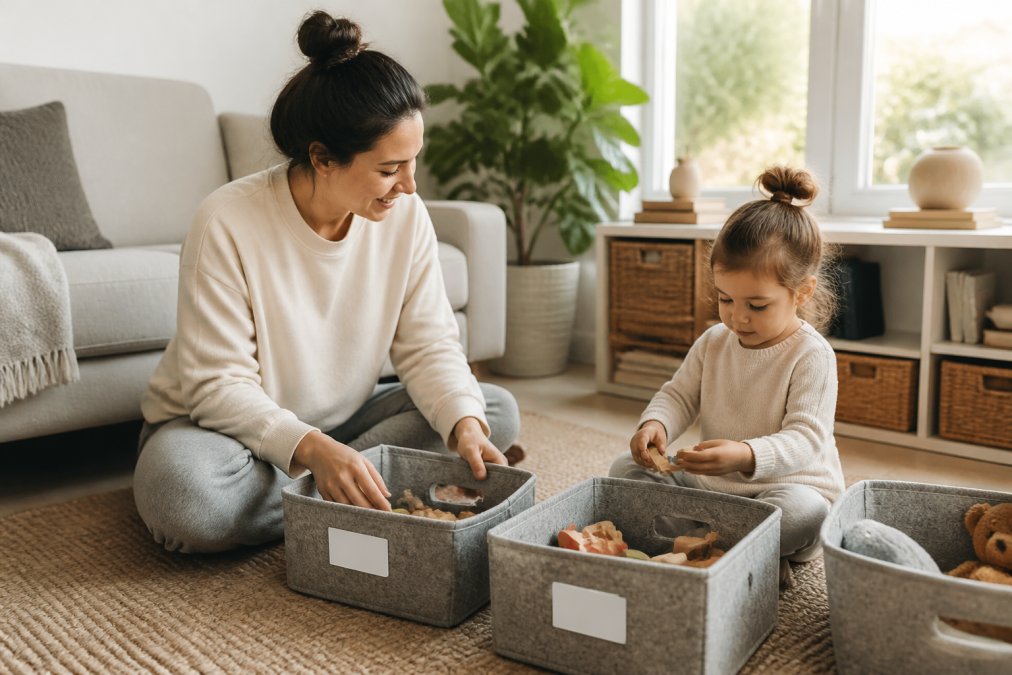
Toy rotation is one of the most effective strategies for managing toy clutter without constant battles. The method is simple: instead of having all toys accessible at once, divide them into smaller sets and rotate them every few weeks. This keeps the play area tidy, extends the life of toys, and actually increases a child's engagement because they rediscover old favorites.
To start, sort all toys into categories, then divide each category into groups. Keep one group accessible and store the rest out of sight in bins or a closet. Every two to four weeks, swap the accessible group with a stored one. This approach also helps with sensory overload; fewer options can lead to deeper, more focused play. It's a powerful tool for teaching children about valuing what they have rather than constantly seeking new stimulation.
Minimalist Wardrobe Essentials for Kids That Last
Kids grow fast, and their clothes take up serious space. A minimalist wardrobe for kids focuses on durable, mix-and-match essentials that survive the playground and the washing machine. The goal is to have enough clothes for a week, not a season, and to prioritize quality over quantity so items can be passed down.
Look for organic cotton and sturdy stitching, and choose a neutral or cohesive color palette so everything coordinates. This simplifies getting dressed in the morning and reduces the "nothing to wear" drama. When you buy fewer, higher-quality pieces, you also reduce your environmental footprint by keeping clothes out of landfills. For a curated selection of durable staples that work for the whole family, explore the timeless essentials at Birch & Co. to see how thoughtful design supports a simpler wardrobe.
How to Choose Durable Home Decor That Won't Add Clutter
When it comes to furnishing a family home, durability is more important than trend. How to choose durable home decor comes down to selecting pieces made from solid, natural materials that can withstand daily wear and tear and that you won't feel the need to replace in a few years. Think solid wood over particleboard, and washable fabrics over delicate weaves.
A minimalist home doesn't mean empty walls; it means choosing a few impactful, functional items rather than many decorative ones. Before buying anything new, ask whether it serves a purpose or brings genuine joy, and whether it fits your family's actual lifestyle. This mindset shift toward essentialism helps you avoid impulse purchases that become tomorrow's clutter. Investing in timeless, well-made items is a form of conscious consumption that reduces waste and saves money over time.
Handling Gifts, Holidays, and Extended Family
Gifts are often the biggest source of family clutter, especially when relatives express love through material possessions. Navigating this requires a proactive conversation with extended family about your family's values. It's helpful to suggest experiences, contributions to savings, or memberships instead of physical items.
When gifts do arrive, avoid the pressure to keep everything. A gentle practice is to thank the giver sincerely, then let the item go if it doesn't fit your home. Many families adopt a "one in, one out" rule to keep the balance. If you face pushback from relatives who don't understand your choices, frame it around the positive benefits for your children, like more space to play and less overwhelm, rather than as a criticism of their generosity.
Teaching Kids About Intentional Living
The long-term goal of family minimalism is raising children who understand the value of intentional living. This means teaching them to appreciate what they have, to make thoughtful choices, and to understand that their identity isn't tied to material possessions. Involve them in decluttering decisions from an early age, asking which toys they really play with and which they're ready to pass on.
Frame decluttering as an act of generosity, where items they've outgrown can bring joy to another child. This builds empowerment and empathy. As your children grow, discuss consumerism and advertising openly, helping them see how marketing creates wants. By modeling sustainable habits and conscious consumption, you're equipping them with a mindset that values experiences, relationships, and sustainability over the accumulation of things.
Adopting a minimalist lifestyle for families takes patience, but the payoff is a calmer home and more quality time together. The challenge is resisting the constant pull of consumerism and staying consistent with your routines. At Birch & Co., our curated collection of timeless clothing and home essentials is designed to support this simpler way of living, offering quality that lasts and design that endures. When you choose pieces built to last, you're not just buying an item; you're investing in a less cluttered, more intentional home. Explore our range of versatile essentials and see how thoughtful choices can transform your everyday life.
Frequently Asked Questions
Can you really be a minimalist with a family?
Yes. Family minimalism focuses on keeping only what serves your household's daily life, not on owning a bare minimum number of items. Start by decluttering your own belongings first, then involve kids in sorting their toys and clothes. The goal is reducing excess to create more time and space for family connection. Many families find that fewer toys and less stuff actually reduces stress and makes daily routines smoother.
How do you manage toy clutter in a minimalist home?
The toy rotation method works well. Keep 10 to 15 toys accessible and store the rest in bins out of sight. Every few weeks, swap the sets. This keeps play areas clutter-free and makes kids more engaged with what's available. Before birthdays or holidays, have your child pick toys to donate. This habit teaches generosity and reinforces that giving away unused items makes room for new ones.
What are 7 daily habits for a minimalist home?
Start with making your bed each morning, which sets a tidy tone for the day. Do a 10-minute evening tidy where everyone returns items to their homes. Clear kitchen counters after each meal. Handle mail and school papers immediately to prevent piles. Keep a donation bin in the closet for outgrown clothes. Wipe down bathroom surfaces nightly. End the day by preparing tomorrow's essentials in one spot, like a bag or entryway tray.
How does minimalism benefit family mental health?
A clutter-free home reduces visual noise, which can lower stress and anxiety for both parents and children. When kids have fewer toys, they often play more creatively and focus longer on one activity. Shared spaces become calmer, which supports better sleep and family connection. For families with sensory sensitivities, reducing excess can prevent overwhelm. The minimalist lifestyle isn't about deprivation; it's about creating room for what matters most.